
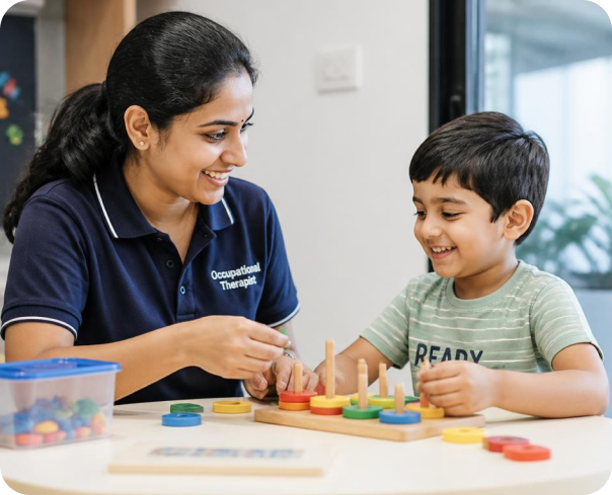
Occupational therapy helps children develop the everyday skills they need to learn, play, and become more independent. Whether it’s holding a pencil, getting dressed, managing sensory challenges, or participating confidently in school and social activities, occupational therapy supports children in reaching their full potential.
Motor & Balance Challenges Clumsy, trips frequently, struggles with stairs or playground activities, or has weak hand strength. Poor body awareness or weak core strength often shows rapid progress with targeted therapy.
Hypersensitive to tags, textures, loud noises, or certain foods. Easily overwhelmed by everyday sensory input, which can interfere with learning, focus, and social participation.
Seeks intense sensory input, crashes into things, or seems unaware of pain or texture. Occupational therapists help children organize sensory input more effectively for daily life.
Meeting milestones slower than peers — not yet walking, talking, or playing at expected ages. Early identification can prevent secondary delays and support school success.
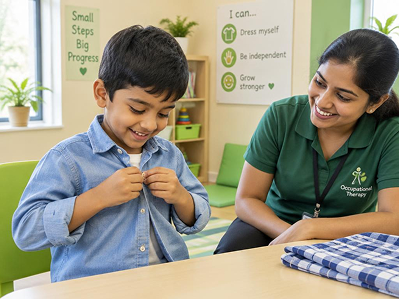
Can't dress, feed, or toilet independently. Occupational therapy teaches these skills systematically, breaking complex tasks into manageable steps until your child achieves confidence.
Self-care independence matters for your child's confidence, school participation, and family life. We practice consistently, building real dignity through hands-on daily-living skill work.
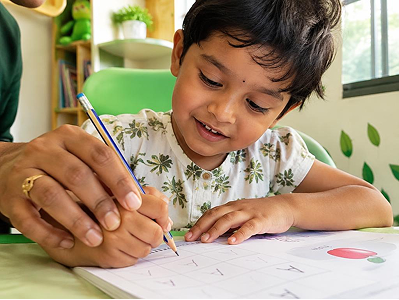
For children struggling with pencil grip, hand strength, scissor skills, or handwriting legibility. We build hand strength, improve dexterity, establish efficient pencil grip, and develop motor control for writing.
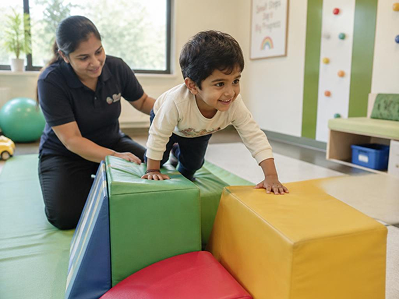
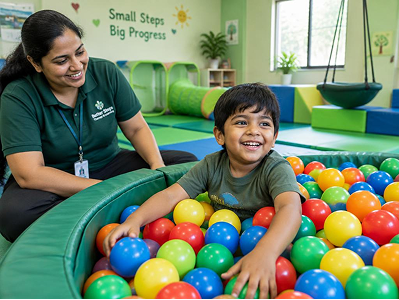
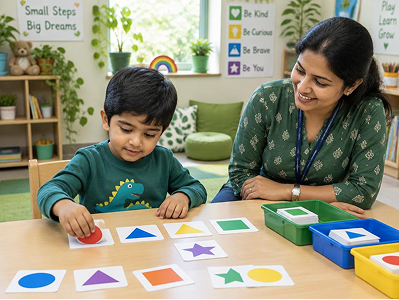
We address the specific motor skills your child needs: pencil grip and hand strength for writing, coordination for sports, balance for climbing, core strength for sitting posture. Play-based activities build strength, control, and movement confidence without feeling like therapy.
Many children struggle not with the skill itself, but with sensory processing. A child might have the hand strength for writing but can't concentrate because sensory input overwhelms them. Sensory integration techniques help your child organize input effectively, improving focus.
We help children build independence in daily living skills like dressing, feeding, toileting, and grooming. Each task is broken into manageable steps, with support gradually reduced as confidence grows, making routines like mealtimes and bedtime smoother for the family.
Handwriting depends on fine motor skills, hand strength, pencil grip, postural control, and visual-motor coordination. We address all these foundations. Many children struggling with writing make significant progress once underlying motor or sensory issues are resolved.
When children accomplish tasks independently, they feel capable. When they understand their sensory needs and have strategies to manage overwhelm, they feel less out of control. Your child develops a sense of "I can do hard things" that shapes future challenges.
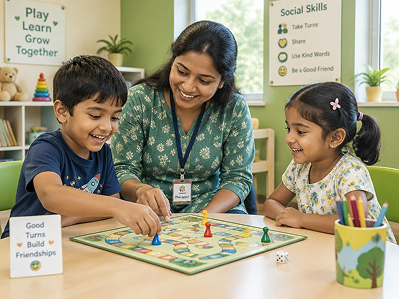
Play is how children learn. Some struggle with play. They don't initiate, take turns, or sustain interaction. We use play as therapy, teaching social skills, turn-taking, sharing, and peer interaction in natural, engaging ways. Your child learns to make friends, and you see them enjoying childhood more fully.
Therapy doesn't end in the clinic. We teach you specific strategies to practice at home. We explain how to set up environments for independence and how to encourage skill practice during daily routines. You're not left wondering what to do. You understand your child's needs and have tools to support development every single day.
We observe your child, gather history, and use standardized tools to understand their unique strengths and needs.
Together, we set clear, achievable goals based on your child's assessment and your family's priorities.
Engaging, one-on-one therapy sessions built around play — designed to feel natural, not clinical.
We equip you with simple strategies to practice at home, so progress continues between visits.
We track outcomes regularly and adjust the plan as your child grows and their needs change.
Detailed assessment that identifies the root of challenges, not just symptoms.
Seamless coordination across specialists in a bright, engaging space.
Parents are part of the therapy team from day one.
Credentialed therapists with years of clinical, evidence-based experience.
No one-size-fits-all approach — plans adapt as your child progresses.
Measurable outcomes tracked systematically, with regular updates on progress.