
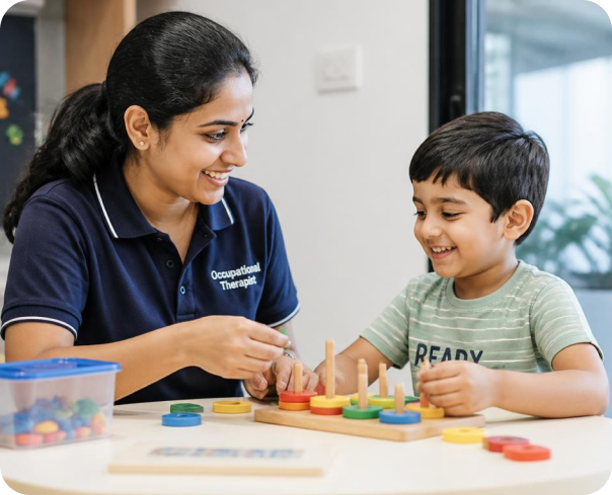
Sensory Integration Therapy (SIT) is a therapy approach that helps children process and respond to sensory information from their body and environment, things like touch, sound, movement, and balance. Some children take in this information differently, which can show up as being overwhelmed by noise or textures, seeking constant movement, or struggling with coordination and focus.
SIT uses structured, play-based activities to help the brain organize sensory input more effectively, so children can respond to their surroundings with more ease and confidence. Sessions are guided by trained therapists and built around each child’s specific sensory profile.
Children who are over- or under-responsive to everyday sensory input like sound, touch, or movement, which can affect comfort, attention, and daily behavior across settings.
Sensory differences are common in children on the autism spectrum, often affecting how they communicate, behave, and function at home, school, and in social situations.
Sensory input can affect attention and focus in children with ADHD, making structured sensory work a useful addition to a broader learning and behavior support plan.
Difficulty with motor planning and coordination often accompanies dyspraxia, and sensory integration work can help children build steadier, more controlled, and confident movement over time.
Sensory processing challenges can interfere with attention, sitting tolerance, and classroom performance, making sensory support a helpful part of managing specific learning difficulties.
Better sensory regulation often supports improved attention and engagement in children with speech and language delays, creating a stronger foundation for communication development.
Progress builds over weeks and months, not single sessions.
Outcomes vary based on each child's sensory profile and needs.
Regular sessions combined with home practice drive the strongest results.
Many families see steady improvement in tolerance, coordination, and focus within a few months.

We start by identifying which types of sensory input your child seeks out and which they avoid.
We choose from movement, touch, and coordination-based activities suited to your child's specific sensory profile.
Activities are introduced in a controlled, supportive setting where your child can build tolerance at their own pace.
Techniques are refined session by session based on how your child responds, keeping therapy matched to their needs.

Pushing, pulling, and carrying tasks that provide deep pressure input, helping children feel more regulated, grounded, and calm, especially before tasks that need sustained focus or sitting still.
Simple sensory activities and strategies parents can practice with their child between sessions.
Keeping sensory strategies part of the daily routine, since consistency plays a large role in progress.
Sharing observations from home so therapists can adjust the plan based on how the child is doing day to day.
Trained occupational therapists with specific experience in sensory integration work.
Practical strategies and consistent communication so families feel equipped, not just informed.
A space designed to help children feel comfortable engaging with new sensory experiences.
Clear goals set at the outset, with progress reviewed against them regularly.
Transparent pricing with no hidden costs, discussed upfront.
Every plan starts with an individual sensory assessment, not a standard template.
Techniques grounded in established sensory integration and occupational therapy practice.
Activities and pacing adjusted continuously based on how each child responds.
Parents kept informed at every stage, not just at scheduled review points.
Easy to reach for regular sessions, which matters for consistent progress.

Progress varies by child. Some families notice changes within a few months, while others need a longer, more gradual course of therapy. Consistency plays a major role in outcomes.
Cost depends on the number of sessions and the specific plan recommended after assessment. Contact our team for current pricing details.
Book an assessment with certified specialists at Sixsenses and get a clear, personalised plan for your child’s development, therapy, and rehabilitation needs.