
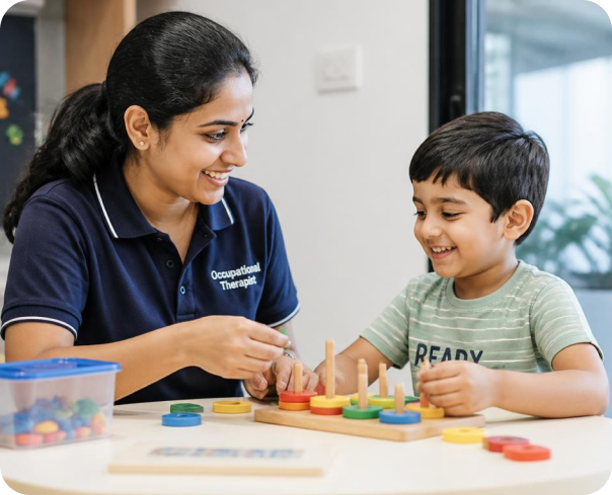
Oppositional Defiant Disorder (ODD) is a childhood behavioural condition marked by a persistent anger, irritability, arguing, and defiance toward parents, teachers, and other authority figures. It goes well beyond the occasional tantrum that most children show growing up. Children with ODD display these behaviours often and consistently, usually for six months or more, straining relationships at home, at school, and with friends.
Most children with ODD are not aware that their behaviour is a problem. They tend to see their reactions as reasonable responses to unfair demands, and they often blame others when something goes wrong. This makes early recognition by parents and caregivers essential. ODD is a recognised mental health condition, and with the right support, most children learn to manage their emotions and behaviour more effectively over time.
Symptoms appear in only one setting, most commonly at home. A child may argue and resist rules with parents but behave typically at school or with friends.
Symptoms appear in at least two settings, such as both home and school. This stage often signals that the behaviour is becoming more entrenched and needs attention.
Symptoms show up in three or more settings, including home, school, and social situations. At this stage, the child's relationships and daily functioning are usually significantly affected, and professional support becomes important.
There is no single known cause of ODD. It typically develops from a combination of genetic, biological, and environmental factors that interact over time.
A child's natural temperament plays a role, and ODD can run in families, especially where a close relative has a mood or anxiety condition.
Differences in emotion-regulating brain areas and nerve-signalling chemicals can make emotional control more difficult for some children.
Inconsistent or harsh discipline, limited supervision, and unpredictable rule enforcement can contribute to ODD, along with broader family instability.
Ongoing stress, exposure to conflict at home, peer rejection, and financial strain can shape a child's behaviour over time. These factors often overlap and having one does not mean a child will necessarily develop ODD.
Left unaddressed, ODD can affect nearly every part of a child’s routine. At home, everyday requests such as getting ready for school or completing homework can turn into prolonged conflicts that strain the whole family. At school, frequent disagreements with teachers and difficulty following classroom rules can interfere with learning and lead to disciplinary issues. Socially, children with ODD often find it harder to form and maintain friendships, since peers may pull away from repeated conflict or blame shifting.
Over time, these challenges can affect a child’s confidence and self-esteem. Many children with ODD also experience co-occurring conditions such as ADHD, anxiety, or learning difficulties, which can compound the difficulty if not identified and addressed together. With consistent, informed support, children with ODD can build the skills to manage their emotions and behaviour more effectively as they grow.
We evaluate how behaviours show up across home, school, and social settings to build a clear, individual picture before recommending a path forward.
Every plan at Sixsenses is built around your child's age, needs, and family context, not a standard programme applied uniformly across cases, since the same behaviour can stem from very different underlying causes.
Children learn to manage strong emotions, build problem-solving skills, and understand how their actions affect the people around them.
Parents receive structured guidance on responding calmly and consistently to challenging behaviour, reinforcing positive actions, and reducing power struggles at home.
Where needed, we coordinate directly with schools to support consistent behaviour strategies across every environment your child moves through, so progress at the centre carries over into daily life.
Because ODD often occurs alongside conditions like ADHD or anxiety, our team evaluates for these as part of the process, since addressing them together tends to improve outcomes.
We track progress across sessions and adjust the plan as your child grows, so the approach evolves alongside their needs rather than staying fixed.
Book an assessment with certified specialists at Sixsenses and get a clear, personalised plan for your child’s development, therapy, and rehabilitation needs.