
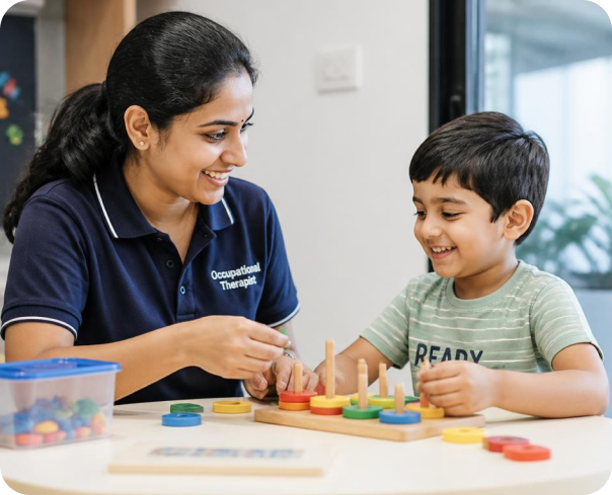
Early intervention refers to a range of services and therapies designed to support infants and young children who show delays or differences in development, whether physical, cognitive, communicative, social, or emotional. It typically involves a combination of assessments, targeted therapies such as speech, occupational, or physical therapy, and guidance for families to reinforce progress at home.
The goal of early intervention is not to label a child, but to give them the right support during the years when the brain is most adaptable, helping close developmental gaps before they compound into larger challenges later in school or social settings.
Every child develops at their own pace, but certain signs may indicate that additional developmental support could be helpful such as:
Difficulty reaching milestones like sitting, crawling, or walking, or trouble with fine motor tasks such as grasping objects and holding utensils, when compared to typical developmental timelines expected for a child their age.
Limited babbling, delayed first words, difficulty forming sentences, or trouble understanding and following simple instructions appropriate for their age, which can affect how well they communicate needs and connect with family and peers.
Limited eye contact, difficulty engaging with others, minimal interest in social or pretend play, or behaviours and reactions that seem inconsistent with typical social and emotional development expected for their age group.
Struggles with age-appropriate self-care tasks such as feeding, dressing, toileting, or following simple daily routines independently, often needing more support and supervision than expected for a child at their developmental stage.

The process begins with a conversation about your child's developmental history, current abilities, strengths, and areas of concern. This initial discussion helps understand your priorities and determine the appropriate next steps for evaluation and developmental support.
A developmental evaluation provides an initial understanding of the child's abilities across relevant developmental areas. Depending on the concerns, it may consider communication, motor skills, social interaction, behaviour, learning, and daily functioning in relation to the child's age.
When further information is required, an in-depth assessment looks more closely at specific developmental areas. This helps identify the child's strengths, challenges, and functional needs and provides clearer information for planning targeted intervention and support.
Assessment findings are used to create a personalised care plan based on the child's developmental needs, strengths, priorities, and family goals. The plan may include specific intervention approaches, activities, home strategies, and opportunities to monitor progress over time.
Our early intervention program in Chennai provides families with access to developmental assessments and therapy based on their child’s individual needs. Depending on the child’s requirements and family preferences, sessions may be available in person at our centre or online.
Our specialists work closely with families to understand developmental concerns, identify areas that need support, and create an intervention plan that is practical for the child’s everyday routines and goals.

Book an assessment with certified specialists at Sixsenses and get a clear, personalised plan for your child’s development, therapy, and rehabilitation needs.