
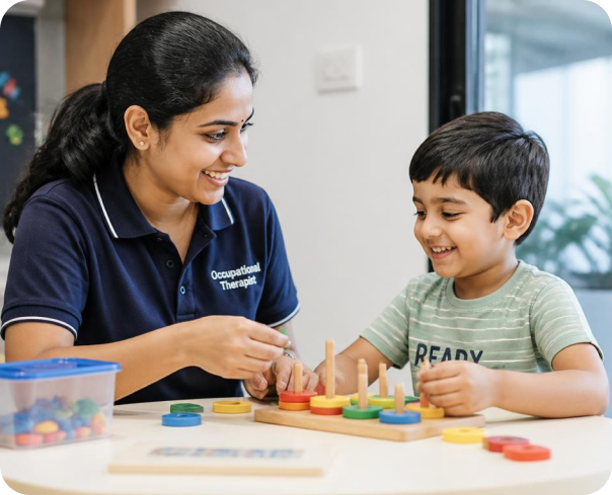
Primitive reflexes are automatic movement responses present during early development. They support early skills such as feeding, posture, movement, and interaction. As children develop voluntary motor control, these reflexes gradually become less dominant. Reflex integration therapy uses structured movement activities to support coordination, balance, posture, body awareness, and motor control.
A therapist assesses the child’s developmental history, movement patterns, balance, coordination, and functional abilities before creating an individualized therapy plan. The approach may form part of a broader developmental therapy programme, with goals focused on practical improvements in everyday activities such as sitting, playing, writing, and moving independently.
Reflex integration occupational therapy uses structured movement activities to help children develop better body awareness, motor control, coordination, and participation in daily tasks.
Depending on the child’s needs, a session may include:
The therapist observes posture, balance, coordination, motor responses, and functional movement to understand areas that need support.
The child performs simple, repetitive movements selected according to their developmental level and therapy goals.
Activities may challenge the child's ability to understand where their body is positioned and how it moves through space.
Exercises involving both sides of the body may be included to support coordination and controlled movement.
When handwriting, hand control, or classroom tasks are affected, therapy may combine movement work with age-appropriate fine motor activities.
The therapist connects exercises to everyday skills such as sitting for activities, dressing, writing, playing, or participating in school routines.

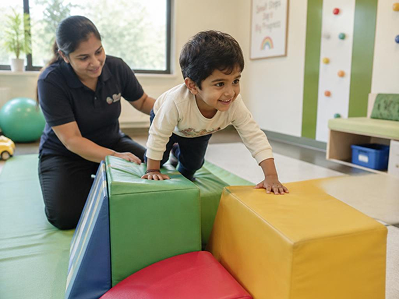
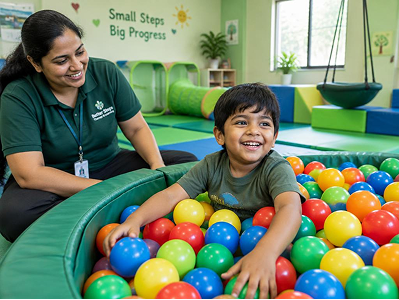

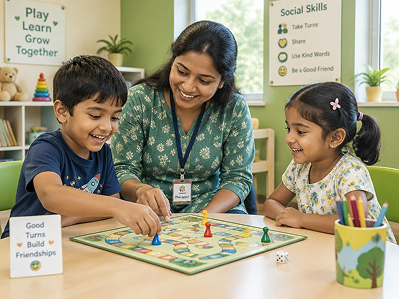
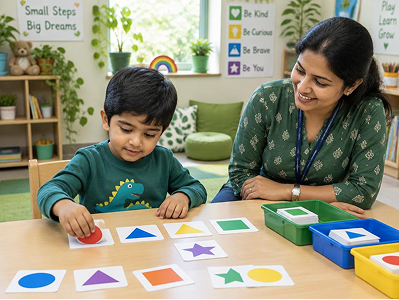
Reflex integration therapy for children may be considered when movement or developmental difficulties affect participation at home, school, or during play.
Children who show delays in gross motor development, coordination, balance, or postural control may benefit from an assessment and an individualized intervention plan.
Children who have trouble with handwriting, maintaining posture at a desk, coordinating both hands, or staying engaged during schoolwork may require a broader occupational therapy assessment.
Children who frequently lose balance, have difficulty coordinating movements, or struggle with body positioning can be assessed for motor and postural challenges.
When emotional responses occur alongside sensory or movement difficulties, therapy can look at the child's regulation, sensory needs, and ability to participate in everyday routines.
Reflex integration therapy should not be considered a treatment for ADHD or sensory processing difficulties on its own. Instead, a therapist can assess the child's specific functional challenges and determine whether movement-based activities should form part of a wider therapy programme.
Complete only the exercises recommended by the therapist and follow the suggested frequency.
Short activities that fit naturally into the child's routine are often easier to maintain than long practice sessions.
Use play, age-appropriate movement, and simple activities to keep the child interested without turning practice into a source of pressure.
Look for changes in activities such as sitting, writing, dressing, climbing stairs, playing, or participating in schoolwork.
Tell the therapist about changes, difficulties, or activities the child enjoys. This helps the programme remain appropriate as the child develops.
Trained Paeditric therapists who assess each child’s movement, coordination, posture, and developmental needs.
Practical home strategies and regular communication to help parents support therapy beyond the clinic.
Age-appropriate activities in a comfortable setting that encourages children to participate without pressure.
Functional goals are identified at the start, with progress reviewed through observable changes in everyday skills.
Therapy costs and session details are explained upfront so parents know what to expect.
Each therapy plan is based on the child’s individual abilities, challenges, age, and functional goals.
Therapy activities selected according to the child’s assessment and established Paeditric therapy principles.
Exercises, activities, and pacing are adjusted based on the child’s response and changing needs.
Parents receive clear updates about their child’s response to therapy and areas that may need continued support.
An accessible location for families seeking regular reflex integration therapy sessions in Chennai.
Choosing a therapy centre involves more than finding a clinic that offers reflex integration. Parents should look for professionals who assess the whole child, explain the purpose of therapy clearly, and connect treatment to practical goals.
At Six Senses Paediatric Physiotherapy Clinic, reflex integration is approached as part of individualized Paediatric therapy. The focus is on understanding the child’s movement, coordination, sensory, and functional needs and selecting activities that support those goals.
Parents are also kept involved throughout the process, with guidance on home activities and regular discussions about the child’s progress.