
Helping children build the foundational skills they need to thrive.
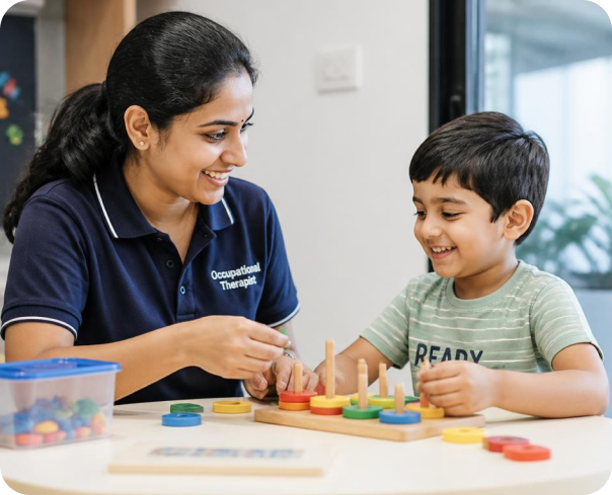
Speech and language delay is one of the most common developmental concerns in early childhood, affecting how a child understands language, expresses themselves, or forms sounds and words compared to what’s typical for their age.
Every child develops at their own pace, but when a child consistently falls behind common milestones, it may point to a delay. This doesn’t mean something is “wrong,” it simply means they may need extra support, and earlier support tends to be more effective in helping them catch up.
At Six Senses, we assess each child individually to understand exactly where the delay lies and build a therapy plan around their specific needs.
Speech delay relates to the physical production of sounds and words. A child with a speech delay may know what they want to say but struggle to form the sounds clearly, resulting in speech that’s difficult for others to understand.
Language delay relates to understanding and using language itself, including vocabulary, grammar, and the ability to follow or respond to conversation. A child with a language delay may struggle to understand instructions, string words into sentences, or express ideas clearly, even if their sound production is fine.
Some children experience both together, which is why an accurate assessment matters before starting therapy.
By 12 to 15 months, most children begin using simple gestures to communicate. Their absence can be an early sign worth watching closely.
Relying heavily on gestures instead of attempting words, even well past the age when speech typically begins to develop.
Difficulty imitating basic sounds or words that parents or caregivers’ model during play and conversation.
Struggling to follow basic one-step directions like “come here” or “give me the ball” by the expected age.
Limited or no spontaneous single words by age two, beyond simply repeating what others say.
Speech that remains unclear to people outside the immediate family well past the age when clarity typically improves.
Visible frustration, crying, or tantrums when the child is unable to get their message across, often because words aren't coming easily.
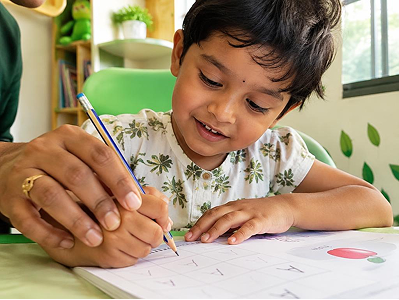
Unable to express needs clearly, children may resort to crying, pointing, or acting out instead of using words, leaving both child and parent frustrated during everyday moments.
Playdates and group activities can become frustrating when a child struggles to join conversations, follow group play, or make themselves understood by peers their own age.
Early language skills are closely tied to reading and pre-literacy development, so ongoing delays can affect vocabulary, comprehension, and overall school readiness as the child grows.
Repeated difficulty being understood can lead to withdrawal, reluctance to speak up, or avoiding new situations, even in settings where the child normally feels comfortable and safe.
We begin with a detailed evaluation of your child's speech sounds, vocabulary, comprehension, and conversational skills, identifying exactly where the delay lies and how significant it is.
Based on the assessment, we design a therapy plan that may include articulation therapy, language stimulation activities, oral-motor exercises, or play-based communication therapy, depending on your child's specific needs.
Parents receive practical, easy-to-use strategies to encourage speech and language development during everyday moments at home, from mealtimes to playtime
We track your child's progress through regular sessions and adjust the therapy plan as their speech and language skills develop, ensuring the approach keeps pace with their growth.

Book an assessment with certified specialists at Sixsenses and get a clear, personalised plan for your child’s development, therapy, and rehabilitation needs.