
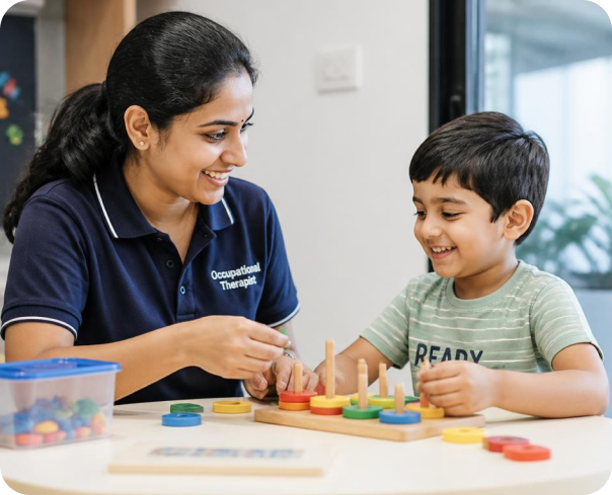
A School Readiness Program helps children develop the skills needed to manage the academic, social, emotional, physical, and practical demands of school. School readiness goes beyond reading and writing. Children also need to communicate their needs, listen to instructions, participate in activities, interact with classmates, follow routines, and adapt to changes during the school day.
Sessions may include structured learning, play-based activities, movement, social interaction, communication exercises, and everyday routines. Activities are tailored to the child’s age, developmental level, strengths, and individual needs. The program aims to build confidence, independence, and essential classroom skills, helping children participate meaningfully and transition into school with greater comfort and readiness.
Children practise staying engaged with activities, listening to instructions, completing simple tasks, and participating in structured learning activities. These skills can help them adjust to classroom expectations more comfortably.
Early literacy activities introduce children to the skills that support future reading and writing. Activities may include recognising letters, developing vocabulary, listening to stories, identifying sounds, and building pre-writing skills.
Children get opportunities to practise communicating with adults and peers, taking turns, sharing, asking for help, responding appropriately, and participating in simple conversations and group activities.
School involves new people, routines, expectations, and situations. Children can learn simple strategies for expressing emotions, managing frustration, coping with changes, and responding appropriately to everyday challenges.
Children practise skills that support greater independence during the school day, such as following routines, organising belongings, managing personal needs, and completing age-appropriate tasks with less assistance.
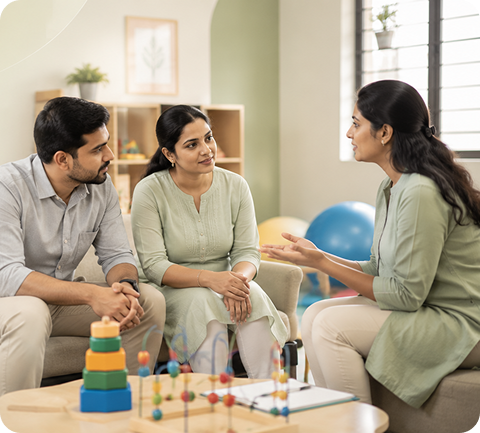
Parents and caregivers can receive practical guidance on supporting school readiness skills at home. Consistent opportunities to practise these skills across settings can help reinforce learning and independence.
Activities support gross and fine motor development needed for classroom participation, including sitting, moving safely, using classroom materials, drawing, colouring, cutting, and other age-appropriate tasks.
Children are encouraged to explore, make choices, understand simple concepts, identify patterns, solve age-appropriate problems, and develop flexible thinking through structured activities and play.
Children are given opportunities to practise skills, make choices, complete activities, and experience success. This can help build confidence and encourage a positive attitude towards learning.
Children develop the ability to understand instructions, express needs, answer questions, build vocabulary, and communicate appropriately with adults and peers, supporting effective participation in classroom activities and everyday interactions.
Early literacy activities introduce children to letters, sounds, books, pictures, stories, and pre-writing skills. These experiences build familiarity with language and provide a foundation for developing formal reading and writing skills.
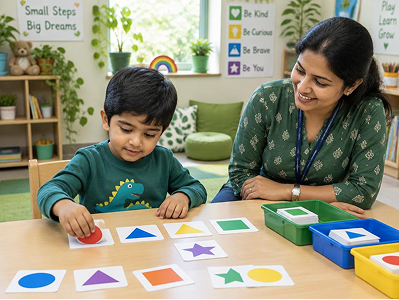
Children explore early mathematical concepts through age-appropriate activities such as counting, recognising numbers, sorting, matching, comparing quantities, identifying shapes, and recognising patterns, helping them develop early numerical understanding.
Children practise solving simple challenges, making choices, identifying solutions, recognising patterns, and understanding cause and effect through structured activities and play, encouraging flexible thinking, reasoning, and independent problem-solving skills.
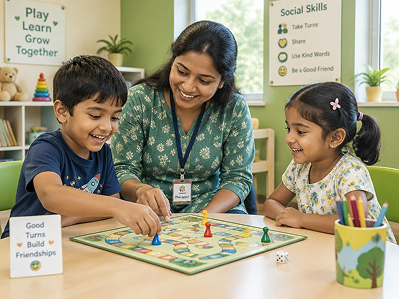
Children develop social skills such as sharing, taking turns, waiting, listening to others, joining group activities, and initiating interactions, helping them build positive relationships and participate comfortably with classmates.
Children learn to recognise and express emotions, understand how others may feel, and respond appropriately in everyday situations. These skills support empathy, emotional awareness, positive relationships, and effective social participation.
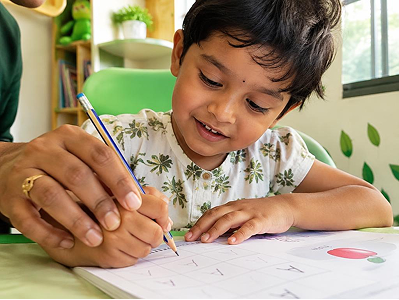
Fine motor activities strengthen hand coordination, grasp, and control needed for classroom tasks. Children practise skills through drawing, colouring, writing, cutting, manipulating objects, and using various learning materials independently.
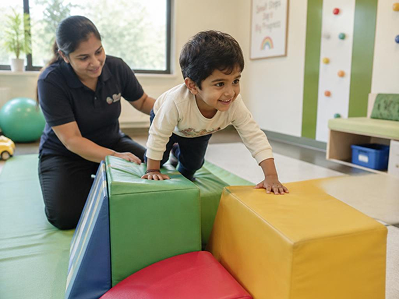
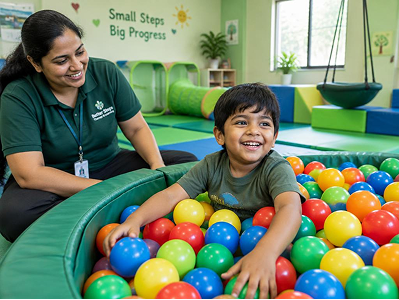
Movement-based activities develop balance, coordination, strength, body awareness, and motor planning. These skills support safe and confident participation in classroom activities, physical play, movement tasks, and everyday school routines.
Children practise following simple instructions, understanding classroom rules, waiting for turns, transitioning between activities, and following predictable routines, helping them become more comfortable with expectations and structure within the school environment.
Activities gradually build attention and task participation by encouraging children to listen, remain engaged, complete simple tasks, follow directions, and shift attention appropriately when activities or classroom expectations change.
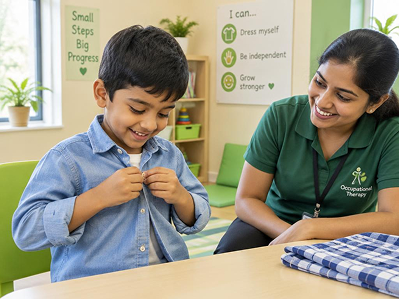
Children develop greater independence in everyday skills such as managing belongings, eating, dressing, toileting, hygiene, and asking for help. These abilities support confidence, participation, and greater independence throughout the school day.
Children learn to recognise and communicate feelings while practising appropriate ways to manage frustration, waiting, changes, and everyday challenges. These experiences support emotional regulation, confidence, adaptability, and readiness for school.
Choosing a school readiness program is about finding support that matches your child’s individual developmental and learning needs. A good program should look beyond academic preparation and consider the communication, social, emotional, motor, attention, and independence skills that influence everyday school participation.
A structured school readiness program in Chennai can provide children with opportunities to practise these skills in a supportive environment before they face the demands of a regular classroom.
The program can also help parents understand which skills their child has already developed and which areas may benefit from additional practice. With consistent support across sessions and home routines, children can gradually become more comfortable with learning, social interaction, classroom expectations, and everyday independence.
There is no single age that suits every child. School readiness depends on developmental skills rather than age alone. Children approaching preschool or primary school may benefit when parents notice difficulties with communication, attention, routines, independence, social interaction, or early learning skills.
Program duration depends on the child’s developmental needs, goals, age, and response to support. Some children may require short-term preparation, while others may benefit from ongoing sessions and regular progress reviews.
Book an assessment with certified specialists at Sixsenses and get a clear, personalised plan for your child’s development, therapy, and rehabilitation needs.