
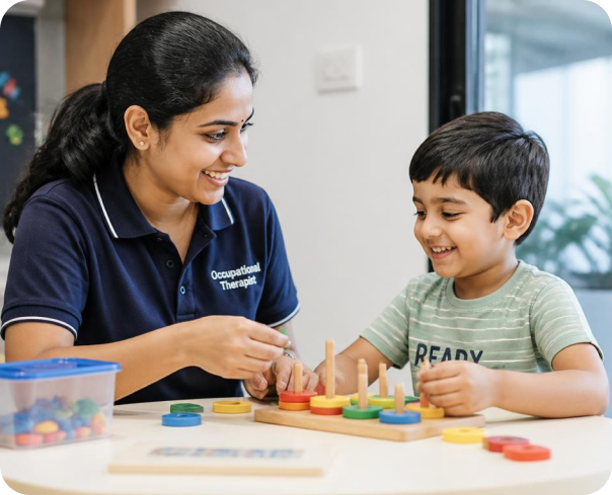
Special education is individualized teaching designed for children who learn differently. It adapts the pace, method, and materials of learning to match how a child understands and retains information, rather than expecting the child to keep up with a standard classroom pace.
At Sixsenses, special education combines structured academics with life skills training, communication support, and behaviour guidance, all built around each child’s specific needs. Our educators work in close coordination with therapists and parents so that progress at the centre carries over into school, home, and daily routines.
Some children need more time, more repetition, or a different teaching method to reach the same milestones as their peers. Recognizing this early makes a real difference in outcomes.
Difficulty with reading, writing, or number concepts despite normal effort and intelligence.
Slower development of reasoning, problem-solving, and adaptive skills compared to same-age peers.
Differences in communication, social interaction, and behavior that benefit from structured, individualized teaching.
Difficulty regulating emotions or behavior in ways that interfere with learning and social participation.
Trouble understanding or expressing language, which affects classroom learning and peer interaction.
Motor limitations that require adapted materials, seating, or teaching approaches to access learning.
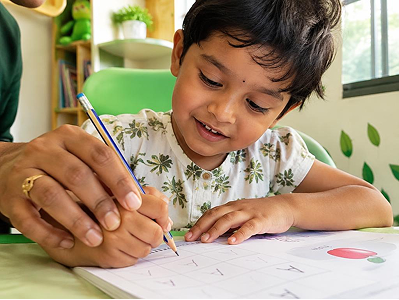
Support for differences in communication, social interaction, behavior, and learning through structured, individualized teaching strategies designed around each child's strengths and developmental needs.
Adapted learning materials, activities, and teaching methods support children with motor limitations, helping them participate in learning while working around movement and coordination challenges.
Teaching approaches are adjusted for children who are over- or under-responsive to sensory input such as sound, touch, movement, or other everyday environmental stimuli.
Structured teaching methods support children who experience difficulties with reading, writing, spelling, or written expression, helping them develop academic skills through approaches suited to their learning needs.
Structured strategies help children build attention, improve task completion, develop self-regulation, and participate more effectively in learning activities within a supportive, low-distraction environment.
Individualized instruction, repetition, and appropriate pacing help children develop academic, communication, and everyday life skills while allowing learning to progress according to their individual abilities.
Teaching is adapted to each child's cognitive, physical, and developmental profile, supporting learning and skill development following neurological injury, birth-related complications, or developmental delays.
If your child has been diagnosed with any of these conditions, or you suspect one may be affecting their learning, our team can help you understand what support looks like and where to begin.
Educators trained specifically in special education methods; not general teaching adapted after the fact.
Approaches backed by research, combining visual, auditory, and hands-on techniques to reach different learning styles.
A space designed for children to feel comfortable, reducing anxiety around learning.
Parents receive consistent updates so they always know where their child stands and what comes next.
No two children follow the same plan — goals, pace, and teaching methods are set individually.
Parents are given practical strategies to continue supporting learning at home, not just updates on classroom progress.
We look beyond academics alone to build the social and daily living skills children need to function independently.
Conveniently located to make regular sessions easier to sustain over time.
Choosing the right special education support means looking for a centre that treats your child as an individual, not a diagnosis. At Sixsenses, our special educators work alongside pediatric therapists to build a single, connected plan for your child’s academic, communication, and daily living goals. We focus on measurable progress and honest communication with parents at every stage, so you always know what to expect and how your child is growing.