
Down syndrome is a genetic condition that occurs when a child has an extra copy of chromosome 21. This additional genetic material can affect physical growth, learning, communication, and motor development. Also known as trisomy 21, it can result in differences in how a child develops and learns.
Every child with Down syndrome is different. Some children may experience delays in speech, movement, learning, or daily living skills, while others may need less support. Early identification can help families access appropriate support, including speech and language therapy, occupational therapy, physical therapy, special education, and regular medical care.
Trisomy 21 is the most common type of Down syndrome. It occurs when a child has three copies of chromosome 21 instead of the usual two in their cells. This usually results from a random error during cell division and is not inherited from either parent.
Mosaic Down syndrome occurs when some cells have three copies of chromosome 21 while other cells have the usual two. Because the extra chromosome is present only in some cells, the characteristics and developmental impact can vary from one child to another.
In translocation Down syndrome, an extra part or all of chromosome 21 becomes attached to another chromosome. This form can sometimes be inherited from a parent who carries a balanced chromosome rearrangement without having Down syndrome themselves.
Down syndrome occurs because a child has extra genetic material from chromosome 21. In most cases, this happens because of a random error during cell division. It is not caused by anything a parent did before or during pregnancy.
Most cases occur when an error during cell division results in an extra chromosome 21. This usually happens randomly and is not inherited.
Translocation Down syndrome can sometimes be inherited when a parent carries a chromosome rearrangement. Genetic counselling can help families understand whether there may be an inherited component.
The likelihood of having a baby with Down syndrome increases with maternal age, particularly after age 35. However, Down syndrome can occur at any reproductive age.
Down syndrome does not define what a child can achieve. Some children may simply need more time and support to develop communication, motor, learning, social, and self-care skills. With encouragement and consistent practice, children can build these skills and become increasingly independent in everyday activities such as feeding, dressing, toileting, communicating, and participating at school.
Some children with Down syndrome may have health needs that require additional monitoring, such as heart, hearing, vision, thyroid, digestive, dental, or sleep-related concerns. With regular check-ups and timely support, many of these conditions can be effectively managed. A supportive combination of healthcare, therapy, education, and family involvement can help children stay healthy, learn new skills, and actively participate at home, school, and in their communities.
We assess your child's communication, motor skills, learning, social development, behaviour, and daily living abilities to understand their individual strengths and areas requiring support.
Every child develops differently. An individualised plan focuses on the skills that are most important for your child's current stage and everyday participation.
Speech therapy can support understanding, vocabulary, expressive language, speech clarity, and functional communication. Children can also be introduced to alternative communication methods when appropriate.
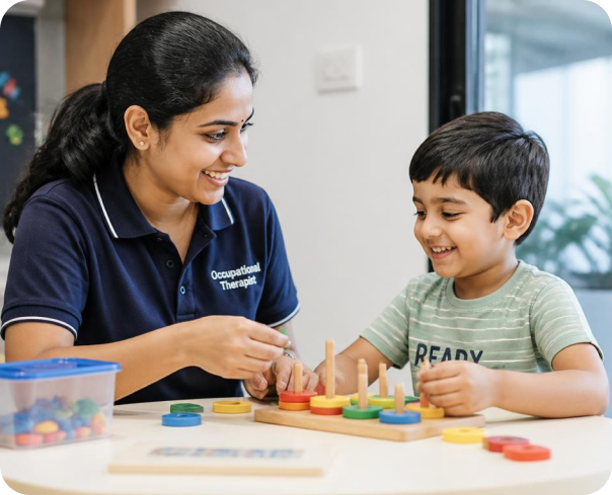
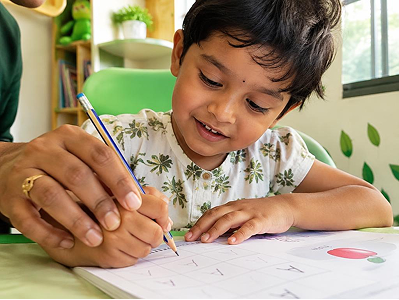
Occupational therapy helps develop fine motor skills, coordination, sensory regulation, self-care abilities, and practical skills needed for feeding, dressing, writing, play, and other daily activities.
Physical therapy and structured motor activities can support strength, balance, posture, coordination, and movement, helping children participate more confidently in play and everyday activities.
Structured learning, visual supports, repetition, and individualised activities can help children develop attention, learning, social interaction, emotional regulation, and independence.
Parents can reinforce developmental goals through everyday routines at home. Practical guidance helps families support communication, motor, self-care, and learning skills consistently between therapy sessions.
As children grow, their developmental priorities change. Regular reviews help monitor progress and adjust therapy goals according to their changing abilities and everyday needs.
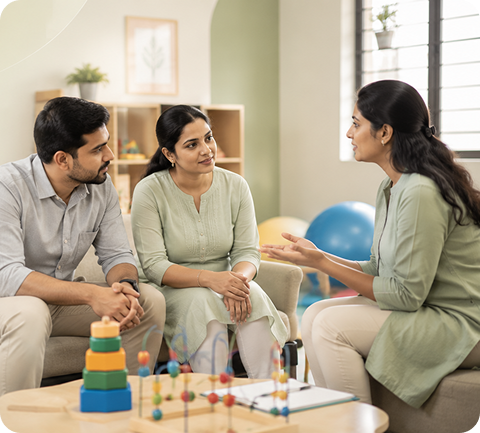
Book an assessment with certified specialists at Sixsenses and get a clear, personalised plan for your child’s development, therapy, and rehabilitation needs.